by Kotaro Sumiya (Japanese Summer Orange)

As everyone knows, musicians often write songs for someone’s death. Before I became a musician, I was disgusted with this trend. Do they have to sing someone’s death on purpose? I was thinking like that.
Sometimes used interchangeably with “guitar pop rock”, in the mid-1980s, the term “indie” began to be used to describe the music produced on punk and post-punk labels. During the 1990s, Grunge bands broke into the mainstream, and the term “alternative” lost its original counter-cultural meaning. The term became associated with the bands and genres that remained dedicated to their independent status. By the end of the 1990s it developed subgenres and related styles including lo-fi, noise pop, emo, slowcore, post-rock and math rock. In the 2000s, changes in the music industry and in music technology enabled a new wave of indie rock bands to achieve mainstream success.
– Wikipedia: The Free Encyclopedia
by Kotaro Sumiya (Japanese Summer Orange)
As everyone knows, musicians often write songs for someone’s death. Before I became a musician, I was disgusted with this trend. Do they have to sing someone’s death on purpose? I was thinking like that.

Let’s start this with a little bit of math. What do you get when you solve the equation below:
The death of your innocence
+ the trials of adulthood
+ dark humor as a coping mechanism
= ???
That’s right! You get my album Dixie Plaza.
As someone who has always wanted to finally get myself together and make an album, I never realized that sometimes it takes your worst moments to create something that you are genuinely proud of in the end result.
by DT Jackson

When Beast Folk formed in 2018, we were not called Beast Folk. It was a melding of the minds of a few friends who frequented Darrell’s Tavern in Shoreline, WA. I was slated to play the Hybrid Festival in Everett. Being an acoustic performer engaged in an event that mostly revolved around metal was a jarring task of fear management. I needed a band.

In the beginning, a rock appeared in the firmament, and on that rock a fissure did form. An old man with youthful eyes looked upon this rock and said, “I shall call you ‘Shredrock.'” And upon receiving the reverberations of his utterance, the rock burst forth a great explosion, showering the old man with mystical properties, endowing him with the wisdom of old age and the vigor of youth. And when the phenomenon did cease, the rock told the man, “I shall call you ‘Grampfather.'”
by Pillowsnake

This is a generic blog post introduction written by yours truly, Jacob La Follette. Pillowsnake is I, 23 and representing South Texas.
You know that thing in your pocket you don’t make phone calls with that isn’t your penis? I use that to make music.
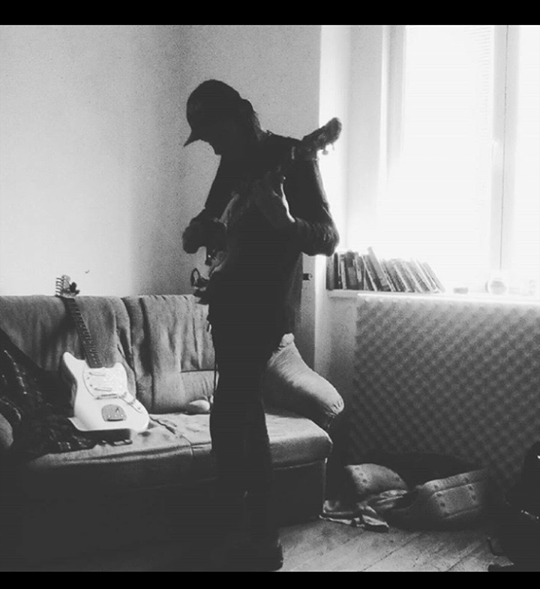
Hi, I am Miira. I am living far from YOUR world. I mean far from this patriarchal-smallminded-selfcalled-society. This is a great pool and I am not very sure that I can swim there or if I even want to. So I created my own world, and I am trying to hold its contour above my head.
by Girl Gang
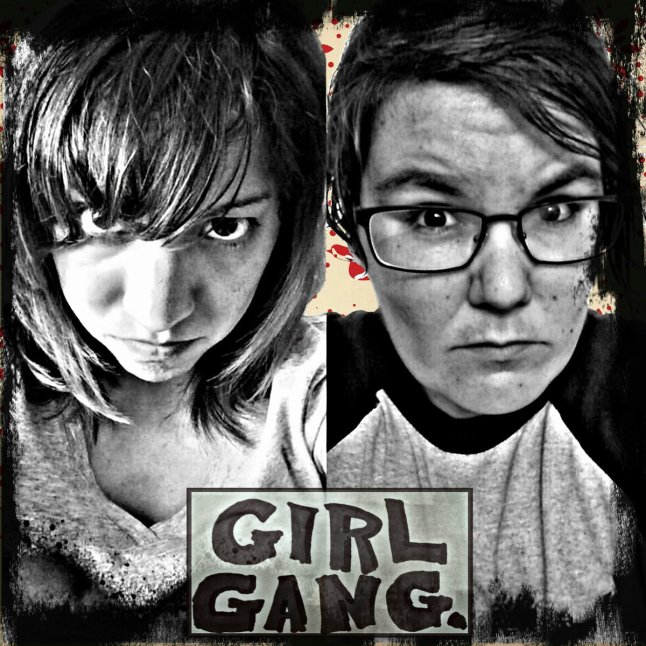
Pretty early on in life, we both figured out that it was okay to challenge the rules. It seemed that people loved to tell us HOW the world worked, but nobody knew WHY it worked the way it did. Why did we have to wear dresses and have pink things?
by Max Colbert

“The moon looked pale and wan, as if it shouldn’t be up on a night like this. It rose unwillingly and hung like an ill specter.”
This is a quote from early in the third chapter of a book called Dirk Gently’s Holistic Detective Agency by Douglas Adams. This is a book that I don’t like very much but loved in 8th grade. Before I was in a band, before I played an instrument, before I even listened to music, I loved the stories of Dirk Gently. So, when my friends and I started a band in middle school, I suggested this line as a name, and, being in middle school, misspelled specter as “spector”. This was, more or less, how the band started; as middle schoolers who couldn’t play our instruments, misspelling words, and deciding we liked it better that way. And this is, more or less, how the band has stayed since then.
by Jolie Flink

In the aftermath of being diagnosed with bipolar disorder and the end of a long-term relationship, I was on a manic tear and writing songs at lightning speed. At the time, my late-night escapades included a lot of flings and raging substance use — this was the only way I knew how to manage my symptoms at the time. I wasn’t exactly treating my bipolar disorder with traditional medicine or therapy.

When I’m playing or listening to music time stands still, and the outside world doesn’t exist. My imagination runs free. That’s what I most enjoy about being a musician. I like to spend time alone which gives me plenty of time to write songs, but then performing in front of an audience is an entirely different thing.